
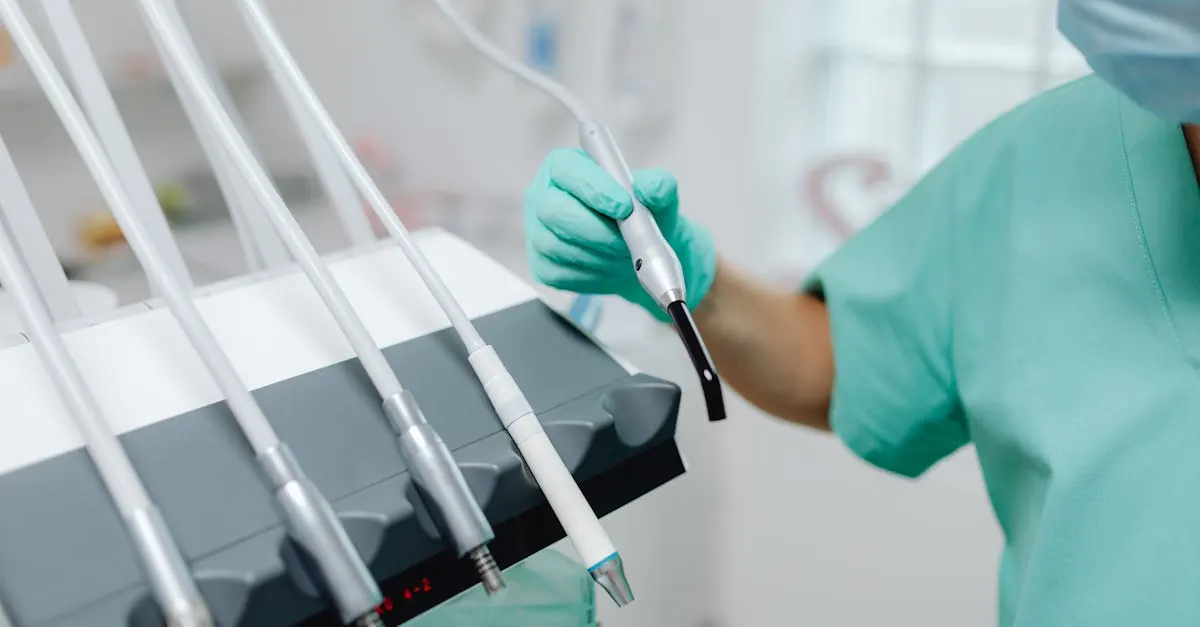
Two cleanings a year is the cadence that, for most patients, keeps tartar from building up enough to inflame your gums. The rule predates most modern dentistry. It still holds up, and for adults over fifty in particular, it matters more, not less.
Here is what actually happens in those two visits, when you need more than two, and what to do if something feels off between them.
The case for twice a year
Plaque, the soft film that forms on your teeth every day, hardens into tartar (also called calculus) in about 24 to 72 hours. Once it has hardened, your toothbrush physically cannot remove it. Only the hygienist's instruments can.
The longer tartar sits on the tooth, especially at the gumline, the more it irritates the soft tissue around it. Inflamed gums bleed when you brush, then start to pull back from the tooth, exposing softer root surface (the part of the tooth below the enamel cap, which is more vulnerable to decay). Twice a year is the schedule that, for most patients, keeps that whole cascade from getting started.
What actually happens in a 45-minute cleaning
If it has been a while since your last visit, here is what the appointment looks like from your side of the chair.
Review (about 5 minutes). Your hygienist reviews your medical history, asks about anything new, a medication change, a recent sore spot, a sensitive tooth.
Imaging if due (about 5 minutes). If you are due for X-rays, we take them now. Our digital sensors (a small wired tab that replaced film) use roughly 80% less radiation than the old film versions, and your image appears on the screen beside the chair the moment it is captured. You see what we see, in the same second. That immediate review is the part most patients tell us they appreciate, no waiting for a verdict in another room.
Periodontal probing (about 5 minutes). Your hygienist measures the depth of the small space between each tooth and your gum. Healthy pockets are 1 to 3 millimeters. Deeper readings tell us where to focus today's cleaning and what to watch at your next recall.
Scaling (about 20 to 25 minutes). This is the cleaning itself. A small ultrasonic instrument loosens tartar above and just below the gumline; hand instruments finish the detail work. We are gentle, we go at your pace, and we tell you what we are doing before we do it.
Polish and floss (about 5 minutes). A polishing paste smooths the surface so plaque has a harder time grabbing on between visits.
Doctor exam (about 5 minutes). Dr. Agrawal completes your exam himself, reviews any new images, and walks you through what he is seeing. If nothing has changed, he will say so. If something is worth watching, you will leave knowing exactly what and why.
Why it matters more after fifty
Gum recession is the most common dental change in adults over fifty. As your gums slowly pull back from your teeth, more of the root surface becomes exposed, and root surface is softer than enamel, it is more vulnerable to decay and tartar collects on it faster. Twice-a-year cleanings keep that under control before it starts producing cavities at the gumline.
Periodontal disease (gum disease that starts at the gumline and spreads down into the bone supporting your teeth) follows the same logic. Once gum tissue has separated from the tooth, plaque collects inside the periodontal pocket, and no toothbrush, no matter how good, can fully reach inside a pocket. Hygienist visits catch early-stage pockets while they are still reversible. The later they are caught, the more involved the treatment.
Medications you may be on after fifty, for blood pressure, for sleep, for anxiety, also dry the mouth. Less saliva means less natural plaque washing, more tartar, more risk. Twice a year compensates.
When three or four visits is right for you
Some patients do better on a three- or four-month recall schedule. That is not us trying to upsell visits, it is the cadence that keeps your specific mouth stable.
The patients who benefit most from a tighter recall:
- Patients with periodontal disease. Once the bone has been affected, even mildly, you need professional cleaning at the rate plaque can re-form in your pockets, which is faster than six months.
- Patients with measurable gum recession. The exposed root surface needs more frequent professional attention.
- Patients with dry mouth from medication. Without saliva, tartar accumulates faster than the six-month schedule can keep up with.
- Patients with a personal history of heavy tartar formation. Some patients simply form tartar faster than average. You will know this is you because your hygienist has had to work harder than usual at the last few cleanings.
Dr. Agrawal and your hygienist will be honest about what schedule fits your situation. For most patients, two a year is plenty. For some, three or four is what keeps things stable.
Signs to call between cleanings
Do not wait for your next recall if any of these come up:
- Bleeding gums that have not improved after a week of more careful flossing
- A tooth that feels taller than the others when you bite down
- Sudden sensitivity to cold that lasts more than a few days
- A sore spot in your gum or cheek that has not healed in two weeks
- A piece of a filling or crown that has come loose
Call 540-337-6004 anytime, day or night. We hold short slots specifically for between-visit checks.
Plan your next cleaning
If you are due, or overdue, give us a call or request your visit online. We are at 21 Scenic Hwy in Churchville, on US-250, Mon to Fri 8 AM to 5 PM. Patients drive in from Buffalo Gap, Deerfield, Middlebrook, Greenville, Fort Defiance, Swoope, and Staunton, and we would love to see you.